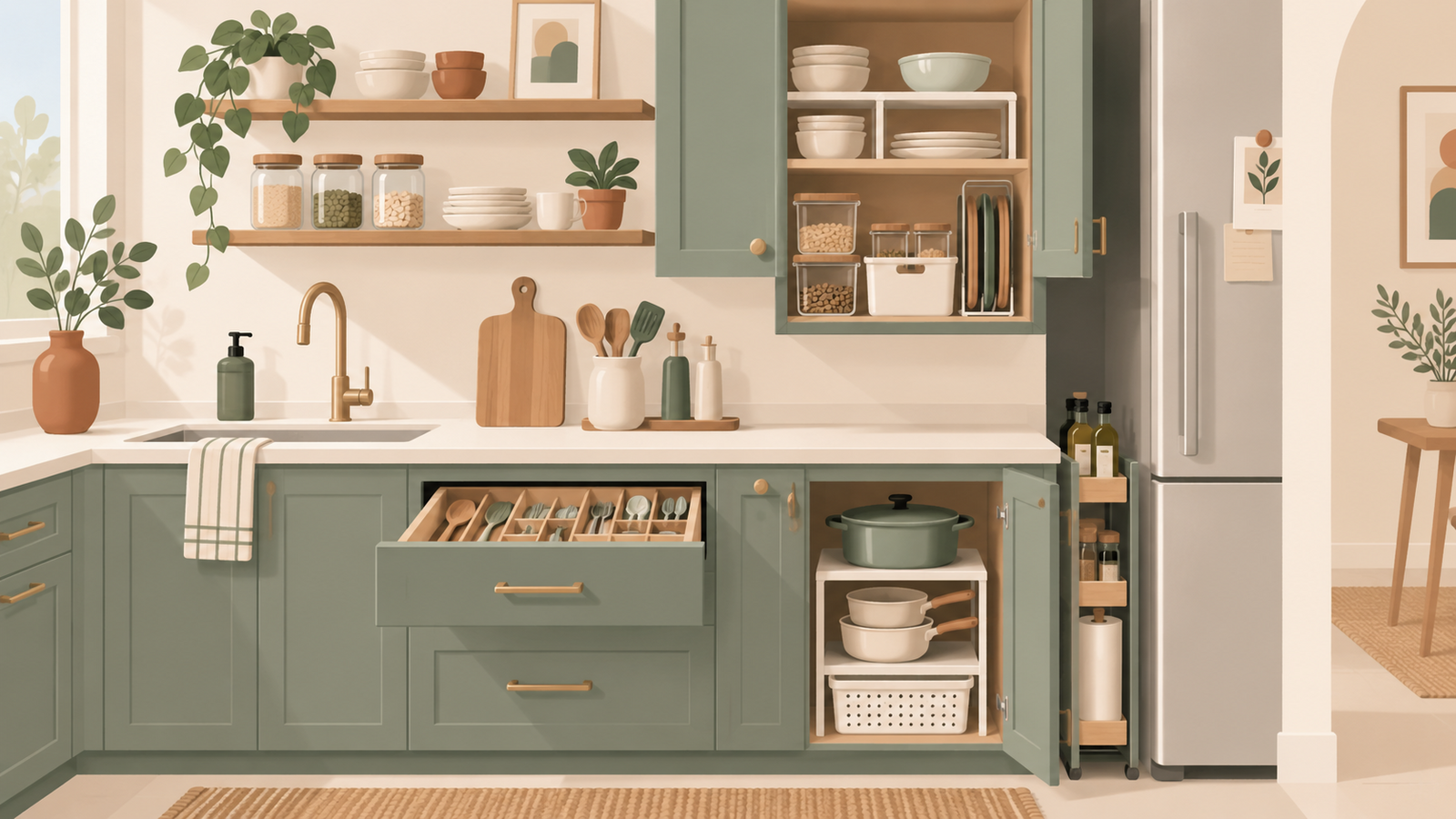
21 Small Kitchen Organization Ideas That Actually Create More Space
Small kitchen organization ideas work best when they solve unusable space, not just visible clutter. Small kitchens often feel short on storage because shelves leave empty air above them, deep cabinets hide what you own, drawers lack clear zones, and counters carry items that belong elsewhere.
Good organization should reduce friction and unnecessary movement. The goal is not to fit the greatest possible number of containers into the room. It is to keep everyday tools easy to reach, give each category a logical home, and recover space without creating a more complicated routine.
Not every organizer is worth buying. This guide starts with the problem and the measurement, then considers a product only when it creates a useful fit. That approach helps apartment, condo, and starter-home kitchens gain practical storage without depending on a remodel.
Before changing anything, watch one ordinary meal or cleanup. Notice what gets moved twice, which cabinet makes you unload other items, and what permanently occupies the work surface. Those friction points are better starting signals than a matching set of bins.
Affiliate disclosure: This guide contains affiliate links. If you purchase through one of our links, OrganizeSmartly may earn a commission at no additional cost to you. We recommend products based on problem-solution fit, dimensions, and practical usefulness. Read the disclosure.
In This Guide
Start Here: Find Out Where Your Kitchen Is Losing Space
Before adding storage, notice where the kitchen slows you down. Crowded counters may point to poorly placed appliances or unused wall space. Cabinets can look full while wasting vertical clearance. Deep shelves may hold plenty but make the back row effectively inaccessible. Drawers become frustrating when unrelated tools migrate into one pile.
Also check unused cabinet doors, exposed walls, refrigerator sides, and narrow gaps—but do not assume every empty surface should hold something. Frequently used items should live near the task they support, while occasional-use pieces can move farther away.
Before buying organizers, clear expired food, obvious duplicates, and rarely used items out of prime storage. Keep the most accessible shelves and drawers for what you reach for often; the rest can move to less convenient space or leave the kitchen.
| Problem | First place to look |
|---|---|
| No counter space | Walls, appliance storage, vertical shelving |
| Crowded cabinets | Shelf risers, vertical dividers |
| Deep cabinets | Pull-outs or turntables |
| Messy drawers | Dividers or inserts |
| No pantry | Cabinet zoning, carts |
| Awkward gaps | Slim storage |
Before You Buy Anything, Take These Measurements
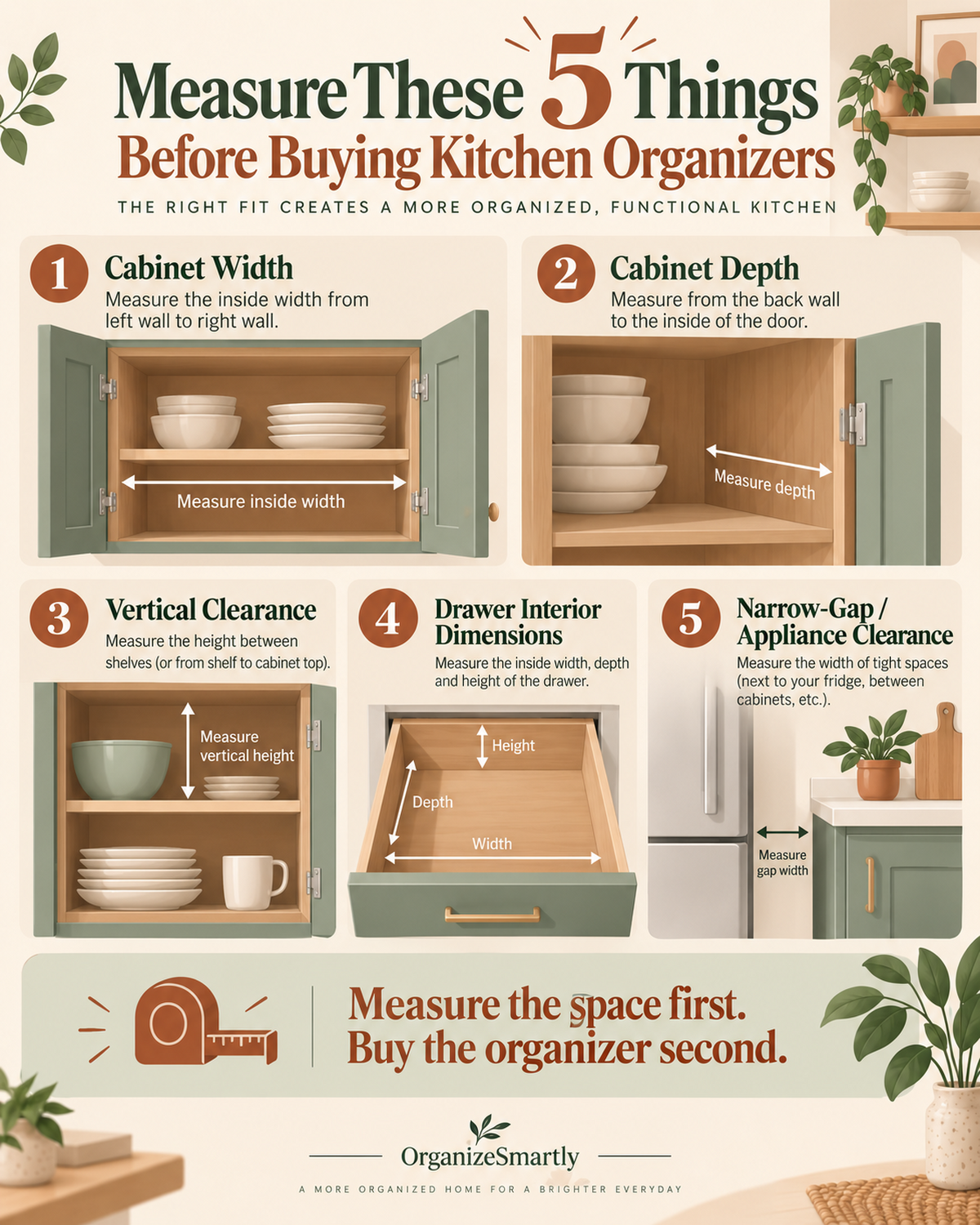
Measure the internal cabinet width and depth—not the exterior face frame. Record the vertical clearance between shelves, then note whether the shelves are adjustable. For drawers, measure the usable interior width, depth, and height after accounting for tapered sides or hardware.
For narrow gaps beside an appliance or cabinet, check the width at several points, the full usable depth, the height, baseboards, door swing, and any ventilation clearance required by the appliance manufacturer. A cart that physically fits can still be the wrong choice if it traps heat or blocks access.
Under a sink, map the P-trap, garbage disposal, shutoff valves, supply lines, cabinet hinges, and the path a rollout needs to travel. Measure the opening as well as the interior; face frames can make the usable entrance narrower than the cabinet cavity.
Space Gain refers to recovered usable storage or easier access to what you already have—not necessarily an increase in the cabinet’s physical volume.
OrganizeSmartly rule: Never buy an organizer because it looks useful. Buy it because it fits a measured problem.
21 Small Kitchen Organization Ideas
Start with the ideas that solve a documented problem in your kitchen. Several suggestions need no product at all; others include an optional organizer candidate that should be measured and verified before purchase.
Use Vertical Space First
1. Add shelf risers inside cabinets
When short dishes, mugs, or pantry containers leave a large pocket of air above them, a shelf riser can create a second usable level. Keep heavy or frequently handled pieces on the lower level and lighter items above. Do not stack so tightly that retrieving one item requires unloading the entire shelf.
Space GainHigh
EffortLow
Renter-safeYes
Measure FirstCabinet width, depth, and vertical clearance
Best ForCabinets with unused vertical clearance
Skip IfShelf spacing is already tight
Kitchen
SONGMICS Cabinet Organizer Shelf
A shelf riser is one of the simplest ways to turn unused cabinet height into usable storage. It works especially well for dishes, mugs, small pantry items, and short containers that otherwise leave empty space above them.
Check on Amazon (opens in a new tab)2. Use vertical dividers for baking sheets and cutting boards
Flat pieces are easier to retrieve when stored upright like files. Group baking sheets, cooling racks, cutting boards, and trays by shape, then leave enough clearance to lift each piece without scraping the shelf above. A basic tension divider or an existing narrow cabinet may be enough.
3. Add stackable storage where shelf height is wasted
Stack only categories that behave well together, such as matching pantry bins or infrequently used serving pieces. Avoid unstable towers and make sure the lower container can be accessed without dismantling the stack. Stackable does not automatically mean convenient.
4. Use the sides of cabinets or refrigerators
An exposed refrigerator side or cabinet end can hold lightweight, high-use items when the surface and clearances allow it. Keep storage shallow, avoid heat and ventilation zones, and check that nearby doors can open fully.
Make Cabinets Easier to Reach
5. Add pull-out organizers to deep cabinets
Deep cabinets often fail because the back row disappears. A pull-out can bring the contents forward, but it needs a clear travel path and enough opening width. Before buying hardware, test the idea with an ordinary handled bin; the low-cost trial may solve the problem by itself.
6. Use turntables for awkward corners
Turntables favor access over maximum packing density. They are useful for bottles and jars that otherwise form unreachable rows, especially when the shelf is deep enough for a full rotation. Group similar heights together so tall items do not knock into the shelf above.
Space GainMedium
EffortVery Low
Renter-safeYes
Measure FirstShelf width, depth, and full diameter clearance
Best ForSauces, oils, condiments, and jars
Skip IfMaximum rectangular storage density matters more than access
Kitchen
Copco Basics 12-Inch Non-Skid Lazy Susan
A turntable does not necessarily create more cabinet volume, but it can turn unreachable back-row storage into usable storage. It is strongest when access, rather than total capacity, is the problem.
Check on Amazon (opens in a new tab)7. Create zones instead of storing by container type
Store items around the task they support: a breakfast zone, baking zone, coffee zone, lunch-packing zone, or everyday cooking zone. A useful zone can span a cabinet and nearby drawer. The test is whether it reduces steps during a real routine—not whether every container matches.
8. Use cabinet doors for lightweight storage
Door storage can recover a thin vertical surface for wraps, lids, cutting boards, or small tools. Close the door slowly during setup and check the hinges, shelf edges, and contents inside. Added weight should remain modest, especially on older doors.
Space GainMedium
EffortLow
Renter-safeDepends
Measure FirstDoor width and thickness, shelf clearance, and hinges
Best ForCutting boards, wraps, lids, and trays
Skip IfHooks or the organizer interfere with shelves or door closure
Kitchen
SimpleHouseware Over-the-Cabinet Door Organizer
Cabinet doors are often overlooked storage surfaces, but door-mounted organizers need more fit checking than they appear to. The organizer has to clear shelves, hinges, and items already inside the cabinet when the door closes.
Check on Amazon (opens in a new tab)Get More From Your Drawers
9. Use adjustable drawer dividers
Adjustable dividers make sense when the drawer is large enough but lacks boundaries. Empty the drawer, group tools by task, and size each zone around the actual items. Leave finger room so utensils can be lifted easily instead of packed edge to edge.
Space GainMedium
EffortLow
Renter-safeYes
Measure FirstMeasure the drawer’s interior span where the divider will sit. This variant expands from approximately 17 to 22 inches. Also confirm the drawer has enough vertical clearance for approximately 2.35-inch-high dividers.
Best ForLong kitchen drawers where utensils and tools need flexible, customizable zones.
Skip IfYour drawer’s usable span is shorter than 17 inches, longer than 22 inches, or too shallow for the divider height.
Kitchen
SpaceAid Bamboo Drawer Dividers with Inserts and Labels
Adjustable dividers are useful when the drawer itself is fine but everything inside it keeps migrating into one pile. This design adds smaller inserts between the main dividers, making it easier to create zones around your actual utensils instead of forcing everything into a fixed tray.
Check on Amazon (opens in a new tab)10. Store utensils by task
Keep prep tools near the prep area, cooking tools near the stove, and serving pieces closer to where food leaves the kitchen. Duplicates should earn their space through actual use. If the same drawer serves several tasks, small labeled zones can prevent categories from drifting together.
11. Move bulky items out of shallow drawers
A shallow drawer should not fight a bulky whisk, ladle, or rolling pin every time it opens. Move tall or awkward tools to a deeper drawer, rail, crock, or cabinet zone. Fixing the mismatch is more effective than buying a complicated insert.
Not sure what fits your kitchen? Use the OrganizeSmartly Product Finder →
Reclaim Your Countertops
12. Move knives to a magnetic strip
A properly installed magnetic strip can free drawer or counter space, but it is not automatically renter-safe or suitable for every household. Choose a location away from children and traffic, use the correct mounting method, and make sure blades can be removed without contacting a wall or cabinet.
13. Move frequently used utensils onto a rail
A short rail can work for a small set of daily tools when wall construction and lease rules allow it. Keep the collection edited; a rail packed with occasional-use gadgets simply moves drawer clutter into view. Removable systems still need verified weight and surface compatibility.
14. Use vertical countertop organizers sparingly
A vertical stand can help with boards, trays, or a few pantry items, but every organizer consumes some counter footprint. Use one only if it makes the remaining surface easier to work on. Measure the base and height, then confirm that upper cabinets will not block access.
15. Relocate rarely used appliances
Counter space should favor tools used several times a week. Seasonal appliances and single-purpose gadgets can move to a labeled cabinet, cart, or nearby storage area. Before relocating anything, consider weight and how safely it can be lifted back into use.
Make Awkward Spaces Useful
16. Organize around under-sink plumbing
Start by tracing every fixed obstruction and keeping shutoff valves reachable. Group cleaners by use, contain possible leaks, and avoid storing products that should not be kept in a hot or accessible cabinet. A rollout is useful only if it clears the plumbing through its entire path.
Space GainHigh
EffortLow
Renter-safeYes
Measure FirstOpening width, depth, height, P-trap, disposal, valves, and hinges
Best ForFrequently accessed cleaning supplies
Skip IfPlumbing blocks the rollout path
Kitchen
YouCopia RollOut Under Sink Caddy
Under-sink storage usually has plenty of theoretical space and very little convenient space. A narrow rollout caddy can make bottles easier to reach while working around plumbing instead of forcing everything into one deep pile.
Check on Amazon (opens in a new tab)17. Use narrow gaps with a slim rolling cart
A narrow gap may hold a mobile pantry for bottles, backup supplies, or lightweight cookware. Measure at the floor, middle, and top because walls and appliances are not always perfectly parallel. Protect ventilation space and make sure the cart can roll out without striking a handle or door.
Space GainHigh
EffortLow
Renter-safeYes
Measure FirstGap width, depth, height, and wheel clearance
Best ForNarrow gaps and kitchens without pantry space
Skip IfIt blocks appliance ventilation or door swing
Kitchen
SPACEKEEPER Slim Rolling Storage Cart
A slim cart can convert a dead gap beside a refrigerator or cabinet into usable storage without permanent installation. The important part is buying for the actual gap rather than choosing a cart first and hoping it fits later.
Check on Amazon (opens in a new tab)18. Use the refrigerator side as storage
If the side panel is magnetic and exposed, removable racks can hold spices, wraps, towels, or frequently used small items. Test the surface first, respect appliance clearances, and keep the rack away from door seals and hinges.
Space GainMedium
EffortVery Low
Renter-safeYes
Measure FirstUsable magnetic surface plus door and wall clearance
Best ForLightweight, frequently used items
Skip IfThe refrigerator side is not magnetic or clearance is limited
Kitchen
HuggieGems Magnetic Spice Storage Rack
A magnetic rack can add removable vertical storage without drilling, making it especially useful for renters. It works best on an exposed refrigerator side where it will not interfere with doors or required appliance clearance.
Check on Amazon (opens in a new tab)Create Storage Where None Exists
19. Add a freestanding cart
A wider freestanding cart can become a prep station, appliance home, or pantry zone without permanent cabinetry. Measure the circulation path with doors and drawers open. Locking wheels, a stable top, and a realistic weight limit matter more than squeezing in the largest possible cart.
20. Create a mini pantry from one cabinet
Choose one cabinet and assign it clear food categories. Keep everyday items between waist and eye level, backups above or below, and opened packages visible. Labels can help, but transparent grouping and a simple restocking routine usually matter more than decorative containers.
21. Add removable wall or door storage
For renters, removable storage should match both the surface and the load. Review the mounting instructions, weight limit, humidity exposure, and removal method. Avoid placing adhesive systems over delicate paint or where falling items could create a safety risk.
Which Organizer Solves Which Small-Kitchen Problem?
| Organizer | Best for | Space Gain | Renter-safe | Measure first |
|---|---|---|---|---|
| SONGMICS Cabinet Organizer Shelf | Cabinets with unused vertical clearance | High | Yes | Cabinet width, depth, and vertical clearance |
| Copco Basics 12-Inch Non-Skid Lazy Susan | Sauces, oils, condiments, and jars | Medium | Yes | Shelf width, depth, and full diameter clearance |
| SimpleHouseware Over-the-Cabinet Door Organizer | Cutting boards, wraps, lids, and trays | Medium | Depends | Door width and thickness, shelf clearance, and hinges |
| SpaceAid Bamboo Drawer Dividers with Inserts and Labels | Long kitchen drawers where utensils and tools need flexible, customizable zones. | Medium | Yes | 17–22-inch usable drawer span and approximately 2.35-inch divider height. |
| YouCopia RollOut Under Sink Caddy | Frequently accessed cleaning supplies | High | Yes | Opening width, depth, height, P-trap, disposal, valves, and hinges |
| SPACEKEEPER Slim Rolling Storage Cart | Narrow gaps and kitchens without pantry space | High | Yes | Gap width, depth, height, and wheel clearance |
| HuggieGems Magnetic Spice Storage Rack | Lightweight, frequently used items | Medium | Yes | Usable magnetic surface plus door and wall clearance |
What to Try First
Begin with the lowest-effort change that solves the clearest daily problem. First remove items that do not belong in the kitchen or are rarely used. Next, relocate tools closer to their task and test zones with containers you already own. Only then add an organizer for a measured gap, shelf, drawer, or access problem.
- Real-space edit: remove or relocate what does not earn prime kitchen space.
- Practical placement: group tools around the task and frequency of use.
- Clear tradeoffs: choose an organizer only when its footprint, access benefit, and installation demands make sense.
A brief weekly reset helps the system keep working: return stray items, remove empty packaging, and reserve prime storage for the things you use most often.
Keep Building a Kitchen That Fits
Browse practical room-by-room guidance built around measurements, routines, and usable space.